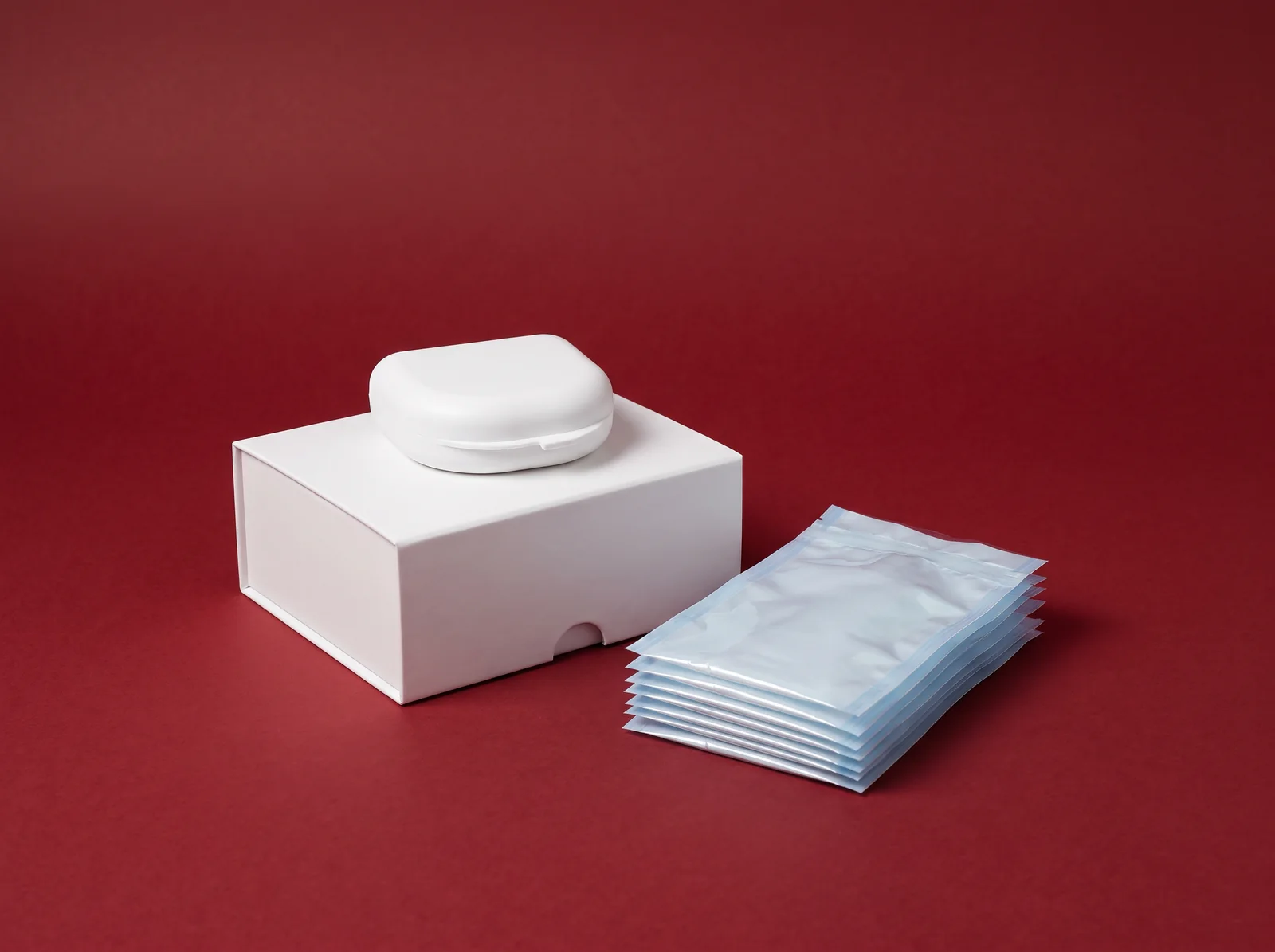
Most aligner cases in dental practices and practice groups run under a supplier's brand. The treatment takes place in the practice's own chairs, yet the trust built up and the brand equity belong to a third party. More and more clinicians and practice groups are drawing a conclusion from this and delivering aligner treatment under their own name, manufactured by a specialised producer in the background. What lies behind this model, and how do you recognise a manufacturing partner that carries it credibly?
At a glance
- With a third-party brand, every case includes the provider's full loaded price, brand, marketing and margin included; with an own line, the practice pays for manufacturing and keeps the difference.
- Setting up your own production facility means building a regulated medical device manufacturing operation, with an ISO 13485 QMS, MDR processes and typically more than a year of lead time.
- According to CLARIQUE's manufacturing partner, in 2026 more than 35 percent of enquiries came from individual orthodontists or small groups (own figures, as of 2026); the model is no longer confined to large corporations.
- The credibility of a manufacturing partner can be made verifiable: ISO 13485, per-case documentation under the MDR, traceability, clinical case review, multi-site structure.
What an own line changes economically
The first effect lies in the unit costs. Anyone treating under an established third-party brand pays for that brand's entire apparatus with every case: global marketing, sales structure, brand mark-up. With an own line, the practice pays for manufacturing; the difference remains in its own calculation. CLARIQUE's manufacturing partner puts the cost advantage over major aligner brands at 30 to 50 percent per case, according to its own figures, with no minimum order quantities and no upfront investment (manufacturer data, as of 2026).
The second effect concerns consistency. Practice groups and multi-clinician practices in particular know the problem of differing materials, protocols and workflows depending on location and provider. An own line makes it possible to define material, treatment protocols and documentation uniformly across all locations. The third effect is strategic: the process and brand value that accrues in patient care over the years remains an asset of the practice, not of the supplier. The US case of a practice group with nine locations that built its own, externally manufactured aligner line under its own name illustrates this pattern; in retrospect, the group describes the step not as a product launch but as the building of a clinical platform that adapts to its own organisation.
That this model is no longer open only to large organisations is shown by a figure from our manufacturing partner: in 2026, more than 35 percent of incoming enquiries came from individual orthodontists or small, owner-managed groups, one of the fastest-growing segments in the private-label sector (manufacturing partner's own figures, as of 2026).
The build trap: why in-house manufacturing rarely pays off
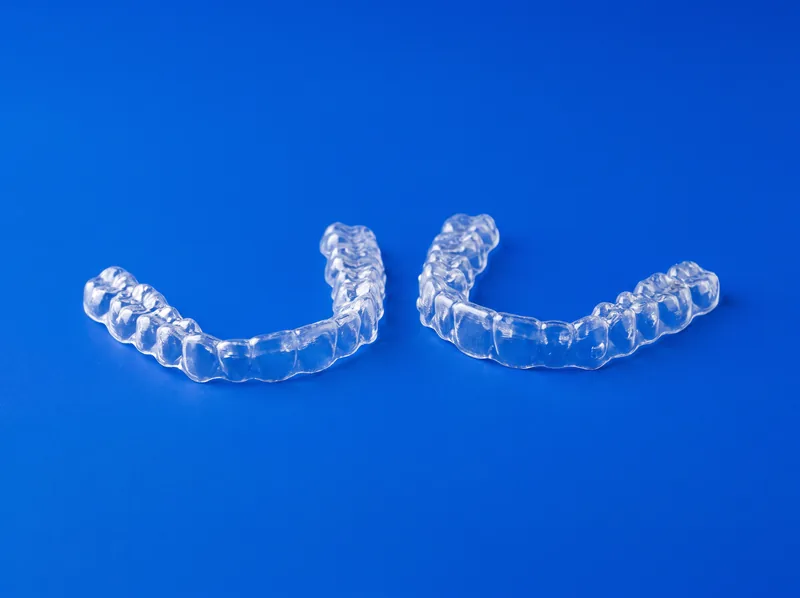
The obvious alternative, printing, thermoforming and trimming in-house, regularly underestimates what an aligner is in legal terms: a medical device, manufactured as a custom-made device under Art. 2(3) of the EU MDR with per-case documentation under the MDR. Whoever manufactures is operating a regulated medical device production with everything that entails: a quality management system to ISO 13485, validated and auditable processes, material qualification, complete documentation and traceability of every single appliance. Equipping a complete production line alone is put at 80,000 to 250,000 US dollars in industry analyses (industry estimate, as of 2026), before software licences, staff and ongoing compliance. The build-up typically takes well over a year before the first case can be manufactured. The result is frequently a sub-critically small manufacturer competing with industrial volume producers, while bearing full liability for quality and regulatory compliance.
How to recognise a reputable manufacturing partner
If manufacturing is outsourced, the decisive question shifts to the choice of partner. Cheap OEM capacity is easy to find and hard to evaluate; weaknesses often only surface after months: as fit variations between batches, as gaps in the certificates, or as a refinement economy that eats up the supposedly favourable per-aligner price. The following criteria, by contrast, are verifiable:
- ISO 13485 as an audited QMS: not as a declaration of intent, but as a valid certificate from a certification body that partner practices can inspect during onboarding under confidentiality.
- Per-case documentation under the MDR for the European market, complemented by the approvals of any further target markets (such as FDA 510(k), MHRA, TGA) where patients are served internationally.
- Traceability: documented batch and case allocation across the entire manufacturing process, as required by medical device law.
- Clinical review of incoming cases: a professional team that reviews setups before production, rather than manufacturing every file sight unseen.
- Resilience at scale: production at multiple sites with identical specifications instead of a single bottleneck plant.
- Terms without entry barriers: no minimum quantities and no upfront investment, so the model can grow with the actual case volume.
For context, this is what such an infrastructure can look like: CLARIQUE's certified manufacturing partner manufactures, according to its own figures, over 20,000 aligners daily across an international network of plants, produces for more than 150 brands in over 40 countries, and has incoming cases reviewed by over 40 employed orthodontists (rounded figures reported by the manufacturing partner, as of 08/2026). Manufacturing is certified to EN ISO 13485 and documented per case under the MDR, with a production time of around five working days from the approved file.
Perspective
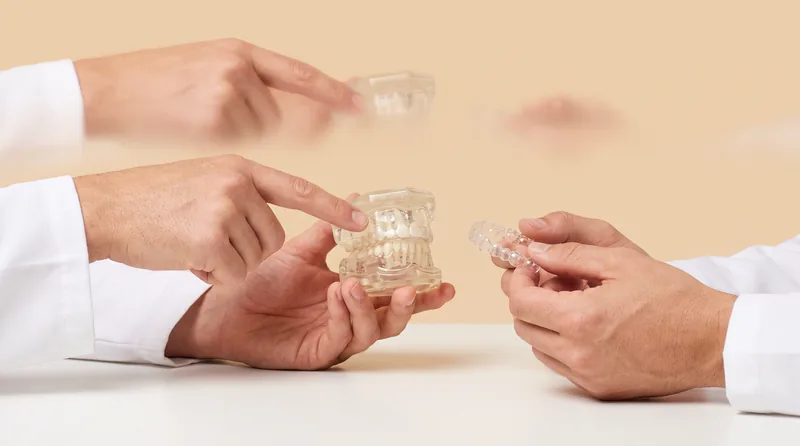
An own aligner line is not a marketing project, but a structural decision about cost base, process consistency and the question of who owns the value built up in your own care pathway over the years. The brand, the look and the treatment experience can be changed later; the manufacturing partner, by contrast, shapes the economics, quality and regulatory safety of the entire programme. The choice of manufacturer is therefore a strategic decision, not a purchasing decision. The core remains untouched by all of this: diagnosis, indication and therapy rest exclusively with the treating clinician; manufacturers and planning service providers deliver infrastructure, not the practice of dentistry.
This article in German: Deutsche Version
Sources
- Manufacturing partner publications on private-label aligner lines (cost advantage of 30 to 50 % per case, enquiry structure 2026, manufacturing capacity and case review), as of 2026; accessed August 2026; manufacturer data.
- Industry analyses on investment costs of an aligner production line ($80,000 to $250,000), cited in manufacturer publications, as of 2026; accessed August 2026; industry estimate.
- Case example of a US practice group with nine locations, documented in the manufacturing partner's publications; accessed August 2026; manufacturer data.
- Regulation (EU) 2017/745 (MDR), Art. 2(3) (custom-made device) and Annex XIII; accessed August 2026; legal text.
Professional information for dental professionals under § 2 HWG (German Act on Advertising in the Health Care System). Clarique Dental GmbH does not provide dental treatment and does not refer patients; diagnosis, patient information and treatment are carried out exclusively by dentists. This article does not replace legal or billing advice.
Read more
In-office fabrication or manufacturing partner? The real math
$80,000 to $250,000 in equipment, breakeven from 20 to 30 cases per month: the complete cost calculation.
Practice economicsThe aligner market in numbers: what 20 million orthodontic cases per year reveal
Market distribution, the missing middle and why Germany is Europe's largest aligner market.
WorkflowPlanning software and clinical control: where clinical authority resides
Closed ecosystems or open workflows, and why the final approval must stay with the clinician.
Price list and samples for your practice
Non-binding enquiry, we usually reply within one working day.