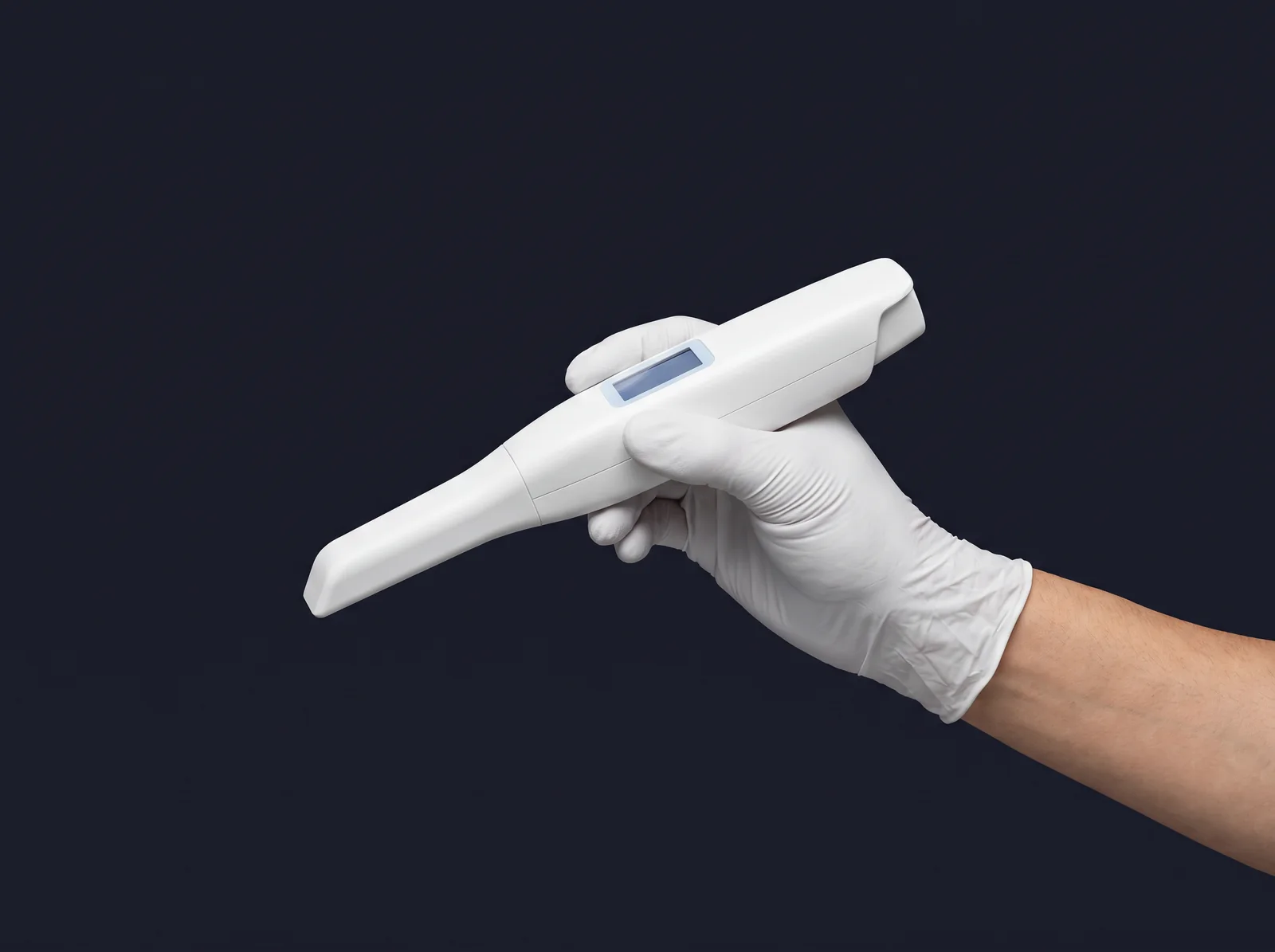
Between the intraoral scan and the first manufactured aligner lies the stage of aligner therapy that determines predictability, treatment duration and the need for corrections: treatment planning. This article describes how a professional planning workflow is structured, using the processes of the CLARIQUE partners as an example: TP Solution GmbH (treatment planning, Cologne) and our certified manufacturing partner.
At a glance
- Every case is commissioned individually in writing, with the clinician's treatment objectives and individual preferences.
- Planning is carried out by specialised orthodontic dental technicians; every finished plan is discussed personally before approval.
- Revisions are unlimited; nothing is produced until the clinician has given express approval.
- Typical timelines: on average 10 working days from submission to final confirmation (TP Solution); manufacturer-side first draft in 24 to 48 h, manufacturing in around 5 working days, delivery in 4 to 5 days (partners' own figures, as of 08/2026).
Step 1: Data transfer and case commissioning
Everything starts with the intraoral scan. The STL datasets are transmitted together with photos and clinical findings via the manufacturer's digital platform; no additional hardware or scanner change is required. What matters is what accompanies the data: in the TP Solution workflow, every case is commissioned individually in writing, with a patient reference, defined treatment objectives and, where applicable, case-specific deviations from the stored preferences. There is no automatic processing of "all incoming cases"; every planning process begins with an explicit clinical objective set by the clinician.
This case commission is preceded by a structured onboarding: the clinician records his or her clinical preferences once, that is movement and attachment protocols, preferred concepts and limits. A personal introductory conversation with the assigned planning technician is recommended, so that subsequent setups match the practice's way of working from the outset.
Step 2: Planning by orthodontic dental technicians
At TP Solution, the actual setup work is carried out by a fixed, personal planning technician, an orthodontic dental technician specialised in aligner orthodontics. Planning takes place not in a separate third-party system, but directly in the setup software of the respective aligner manufacturer, via a staff account set up by the clinician. This has two practical consequences: the clinician always sees the identical planning status in the familiar system, and no information is lost in transfer between the planning and ordering environments.
The technician also handles the entire communication with the manufacturer's lab, those back-and-forth loops that cost most practices the most time. According to its own figures, TP Solution has processed over 200,000 treatment plans since its founding in 2014, with an explicit specialisation in complex cases; its clients record, on average, a 30 percent lower refinement rate (TP Solution's own figures, as of 08/2026). Measured against literature values of 40 to 60 percent refinement rates across all case classes, that is the lever where planning quality shows most clearly in economic terms.
Step 3: Plan discussion and unlimited revisions
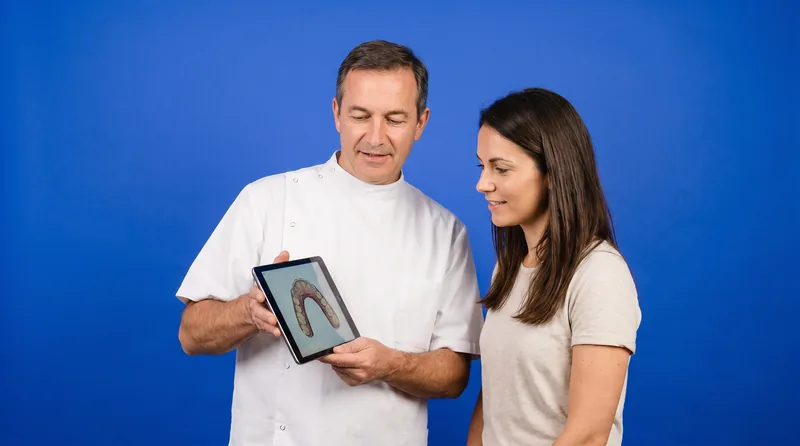
Only once the technician himself or herself considers the setup predictable and well-fitting is it presented to the clinician, and not as an anonymous system notification, but as a plan discussion by phone or in writing. Staging, attachments, IPR distribution and critical movements are talked through; requested changes flow into a revision. The number of revision loops is unlimited: the plan is adjusted until the clinician fully stands behind it. This principle is more than a service convenience: it ensures that the approval is a genuine clinical decision rather than a rubber stamp under time pressure.
Step 4: Approval by the clinician
Approval of the setup is given exclusively by the clinician, in the manufacturer's software. Only this confirmation triggers manufacturing. This keeps the chain of responsibility unambiguous: the planning service provider creates and optimises the digital setup as a dental laboratory service, the manufacturer produces the approved setup as a custom-made device; diagnosis, indication and the therapeutic decision rest with the clinician at all times. On the manufacturer's side, according to company figures, over 40 employed orthodontists at our certified manufacturing partner additionally review the incoming cases before production begins (own figures, as of 08/2026).
Step 5: Manufacturing, delivery, treatment support
After approval, manufacturing takes over. For an idea of the timelines, the two partners' self-reported figures can be brought together (as of 08/2026):
| Process step | Responsibility | Typical duration (self-reported) |
|---|---|---|
| Manufacturer-side first draft after case submission | Manufacturing partner | 24 to 48 hours |
| Complete planning process incl. discussion and revisions through to final confirmation | TP Solution | on average 10 working days |
| Manufacturing from approved file | Manufacturing partner | around 5 working days |
| Dispatch and delivery | Manufacturing partner | 4 to 5 days |
These values are to be understood as the companies' average or standard figures; the actual duration varies with case complexity and revision needs. What matters is the distinction between the two timelines: the fast manufacturer-side first draft within 24 to 48 hours describes the technical draft; the ten working days of the planning service, by contrast, cover the complete clinical coordination process through to a robust approval, including all revision loops.
The process does not end with delivery. Throughout the entire treatment period, the planning partner remains the point of contact, for tracking problems, unexpected events, or the question of whether a mid-course correction makes sense. If a refinement becomes necessary, it is planned, discussed and approved in the same workflow as the original setup. The planning service is billed as an external dental laboratory service, collected once a month.
Conclusion
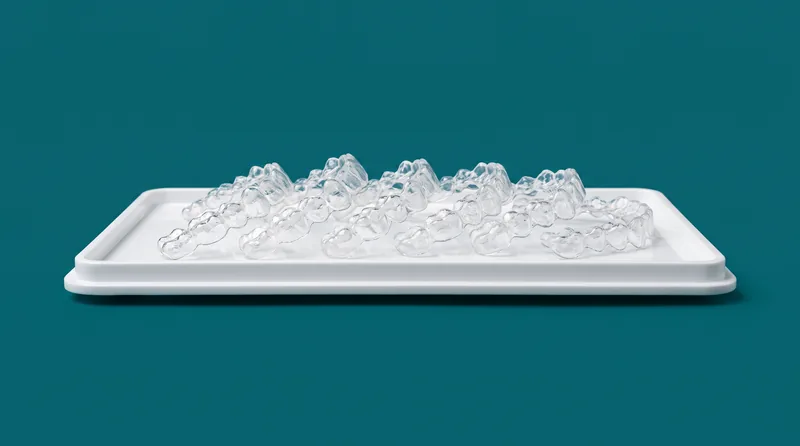
Professional aligner treatment planning is not a single software export, but a structured process with clear responsibilities: defined case commissioning, specialised dental-technical planning, personal discussion, unlimited revisions, and an approval worthy of the name. For the practice, this means predictable workflows and fewer corrections, without clinical authority leaving the practice for even a single step of the process.
This article in German: Deutsche Version
Sources
- TP Solution GmbH (Cologne), service, workflow and contract information at tpsolution.com (over 200,000 treatment plans since 2014, on average 30 % lower refinement rate, on average 10 working days to approval); accessed August 2026; company's own figures.
- Process and capacity information from the manufacturing partner (first draft 24 to 48 h, manufacturing around 5 working days, delivery 4 to 5 days, case review by employed orthodontists), as of 08/2026; accessed August 2026; manufacturer data.
- Refinement rates of 40 to 60 % across all case classes, cited in the manufacturing partner's publications, as of 01/2026; accessed August 2026; industry estimate, not CLARIQUE's own research.
Professional information for dental professionals under § 2 HWG (German Act on Advertising in the Health Care System). Clarique Dental GmbH does not provide dental treatment and does not refer patients; diagnosis, patient information and treatment are carried out exclusively by dentists. This article does not replace legal or billing advice.
Read more
Planning software and clinical control: where clinical authority resides
Closed ecosystems or open workflows, and why the final approval must stay with the clinician.
Practice economicsHow to read and calculate refinement rates correctly
A survey covering 2,937 treatments shows refinement rates above 70 %, and how practices measure their own rate correctly.
ClinicalPlanning predictable aligner treatments: five data-driven principles
Case selection, biomechanics, attachments, staging and refinement management, with a checklist before case approval.
Price list and samples for your practice
Non-binding enquiry, we usually reply within one working day.